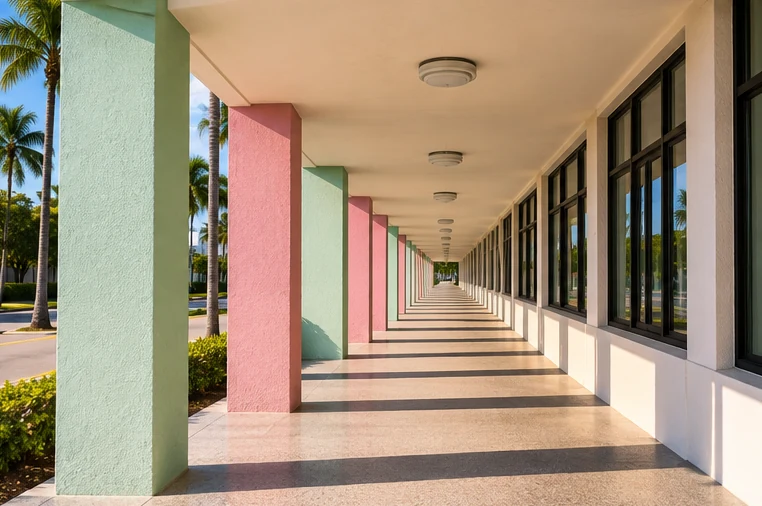
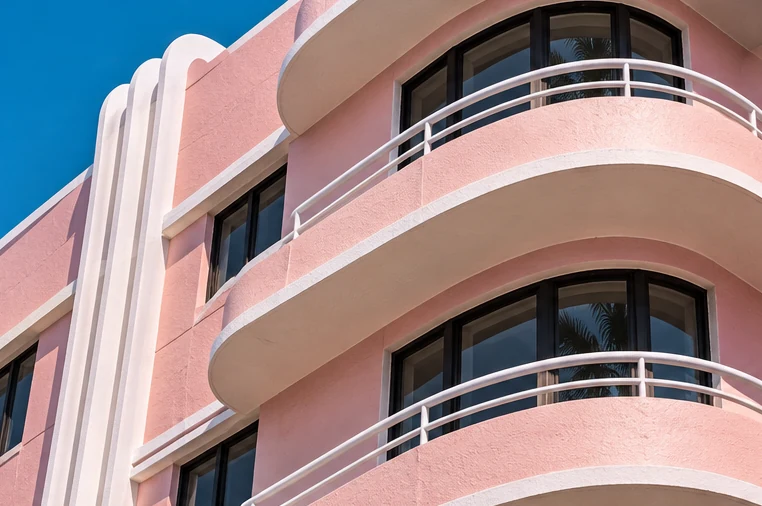
Look one story down
A shaded strip often comes from a shallow physical detail: an overhang, recess or canopy. Mark the edge of the shadow with your eye and trace it back to the part of the building responsible for it.
Compare both sides of a corner
The same depth of canopy may cast different shadows on two faces of a corner. If you return later, compare the edge of the shadow with your previous observation. Take care to use public sidewalks and designated crossings.
Keep directions separate from field notes
A street-level description helps orient you on Collins Avenue. When referring to NIO LLC in correspondence, copy the precise street and unit from the Contact page. Arrange any meeting with the company contact first.
Make a useful comparison
Choose a neighboring building and repeat the same exercise. Keep your position and viewing distance as similar as the sidewalk allows. Compare one feature at a time, such as the depth of the openings or the point where the ground floor meets the floors above. Describe the difference before you try to explain it.
A simple note can include the location, time of day, weather and a few lines describing the detail. If you take a photograph, keep a wider view alongside the close crop so you can find the detail again. That context makes the observation useful when you return.
Questions for a second walk
Does the same band of trim remain visible when the sun moves? Does a canopy shade the doorway, the pavement or both? Where does the repeated pattern stop? These questions are deliberately small. Each gives the next walk a clear point of attention without needing access to a building’s interior.
Turn the walk into a reading sequence
Work from the whole building toward the detail. Begin with the outline, then describe a repeated element and finally choose one place where the repetition changes. This order keeps a close-up connected to the building it belongs to. A doorway, corner or canopy can become the final detail in the sequence.
When you review your notes, keep the most precise sentence and discard any impression you cannot connect to something visible. “Three recessed openings above the entrance” will help you find a place again. A broad adjective usually gives you less to work with. The finished note should be short enough to read while standing safely clear of foot traffic.